

Introducing
Introduction to mock-config-server
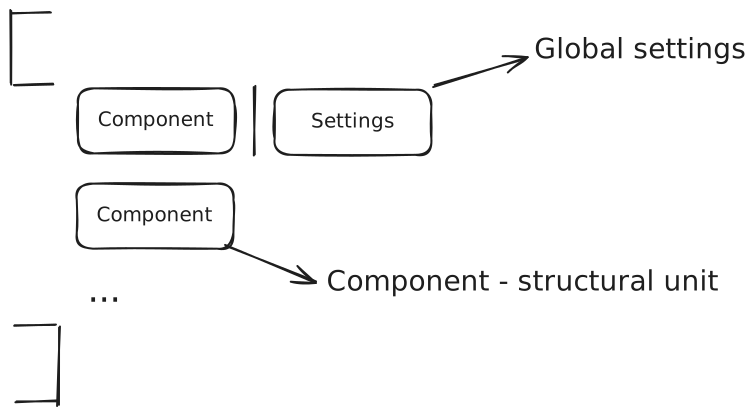
The global mock configuration is represented as an array in which the first element is either settings or a component, and all subsequent elements are components.
Settings
Settings define global parameters for the mock server. They enable you to configure features such as CORS, logging, artificial delays, and other operational options that apply to the entire server.
Settings are optional and can be placed as the first element in your configuration array. For detailed information, refer to the Settings section.
Components
Components are modular units that organize and group related mock requests. They allow you to:
- Scope requests under a common base URL
- Apply shared interceptors to all requests within the component
- Group related endpoints together for better organization
Each component contains a configs array, which holds the actual request definitions. These configs are where you define how individual API endpoints should be mocked.
For detailed type information, refer to the MockServerComponent reference.
Configs
Configs are the fundamental concept in the mock server. Each config defines how to handle a single API endpoint.
Configs are easy to fill and maintain. They allow you to emulate various application behaviors by specifying matching criteria:
- For REST requests:
headers,cookies,query,params, orbody - For GraphQL requests:
headers,cookies,query, orvariables
Using these matching criteria, you can define different responses for different request conditions, making it easy to simulate various server behaviors and edge cases.